The MiamiHomeowner'sGuide toPressure Washing
What to clean, what to never blast, and when to call a pro.
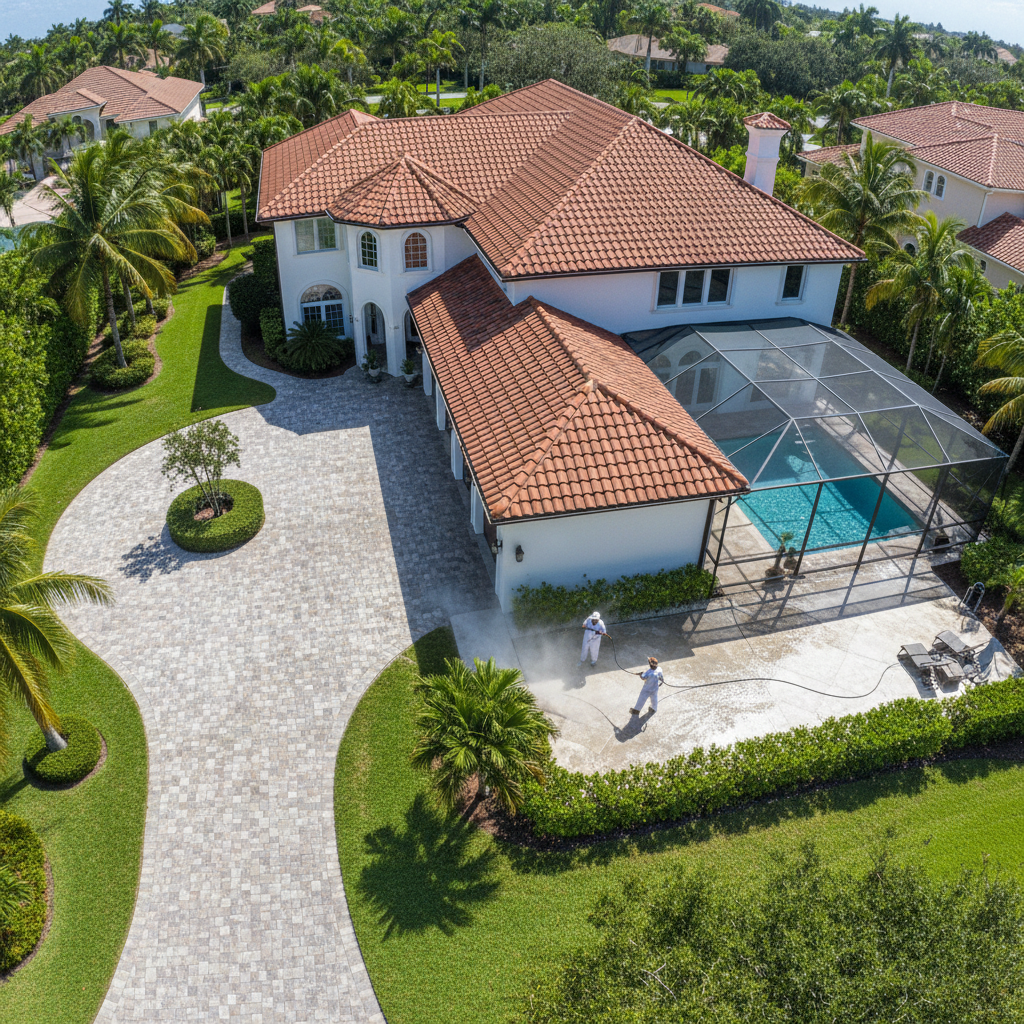
6 Surface Types · 6 Different Approaches
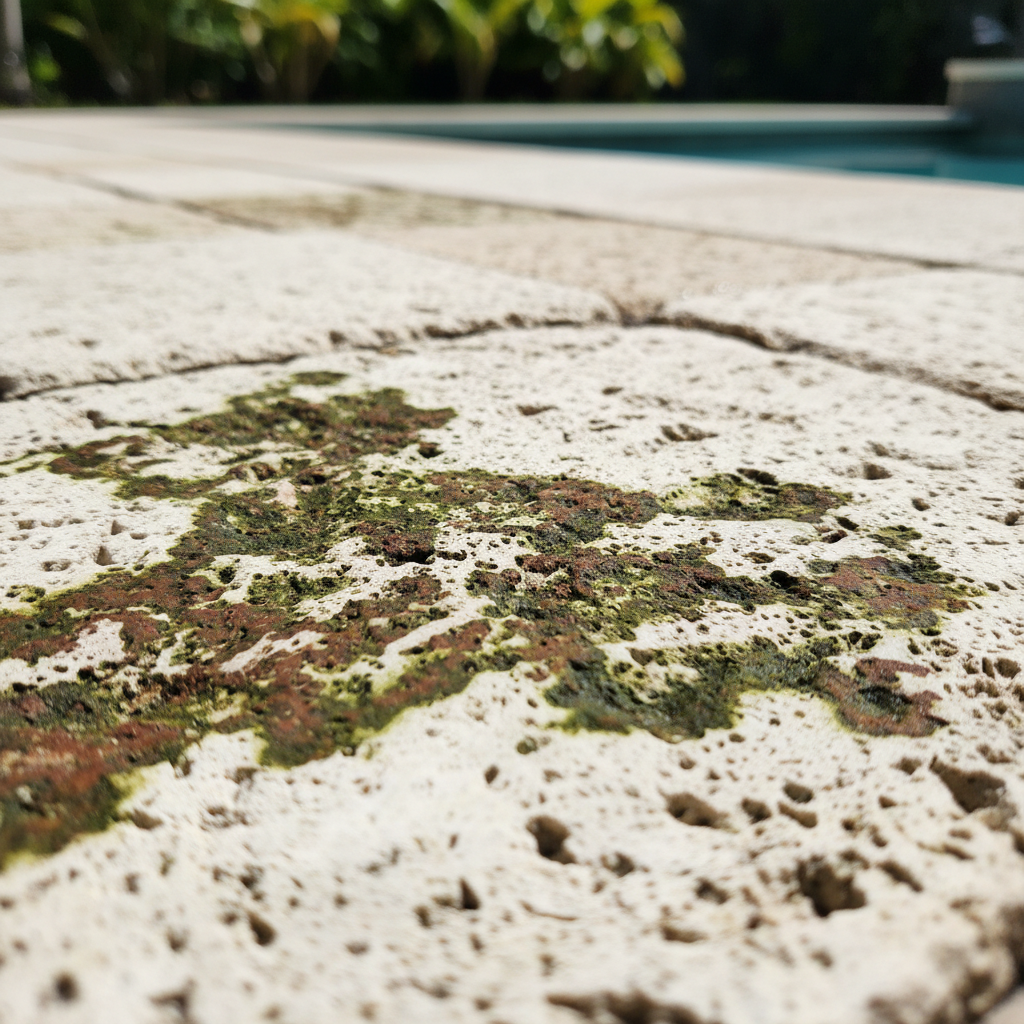
Coral Stone & Oolite: The Surface That Punishes Mistakes
Coral stone is the defining material of old Coral Gables. It looks bulletproof but it's essentially compressed marine limestone — porous, soft, and deeply unforgiving if you hit it with a red-tip nozzle. We see DIY damage every week. The correct approach is soft wash: low pressure, high-dwell detergent, and a 40-degree white-tip rinse from a safe distance. Mold and algae release chemically, not mechanically. Your stone stays intact. Your neighbor's envy stays intact too.
Standard pressure tip at 2,500 PSI — pits surface permanently in one pass
Soft wash only. Let chemistry do the work. Rinse from top down.
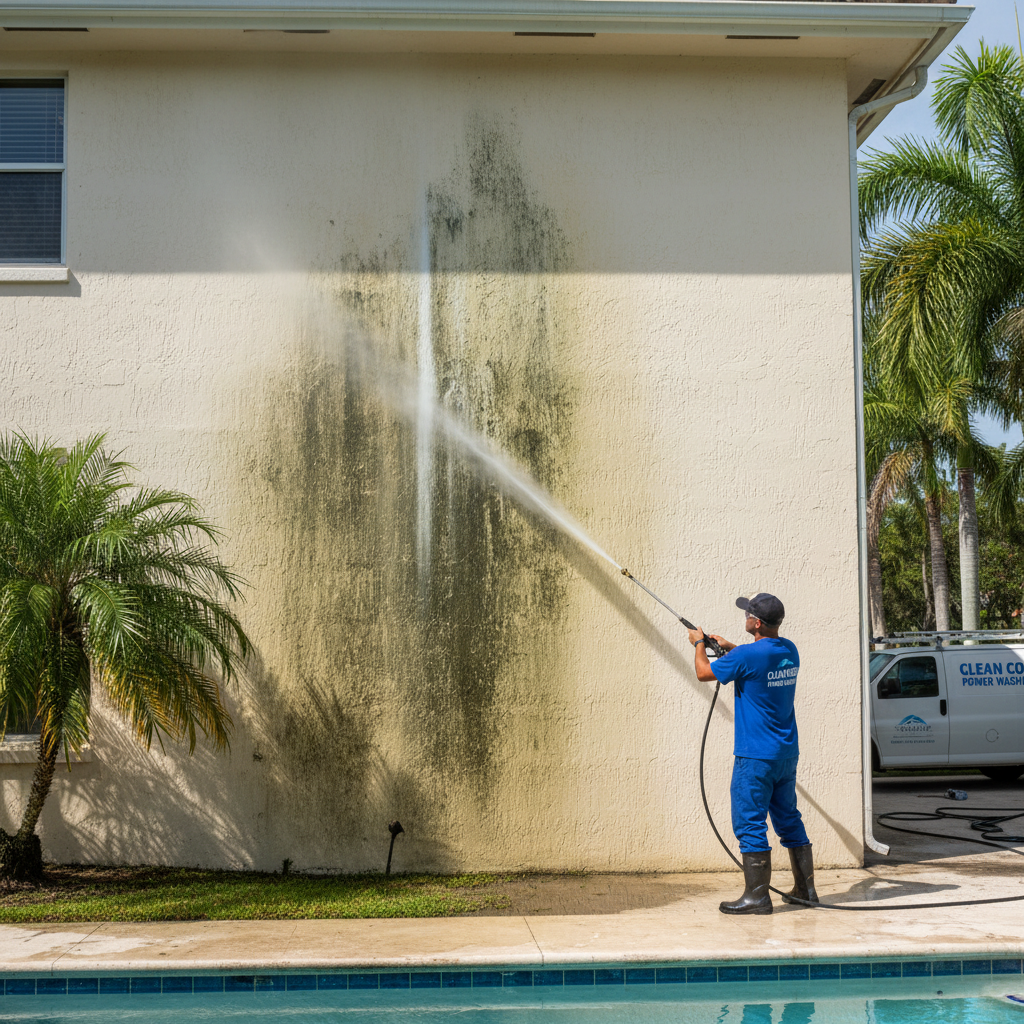
Painted Stucco: Mildew Hides in the Texture, Not on It
Brickell property managers know this problem well: black mildew streaks between tenant turnovers that look painted on. They're not — they're Gloeocapsa magma, a cyanobacteria that embeds in paint texture. Standard pressure washing moves it around. Soft wash kills it at the root. We use a 3% SH solution with a surfactant that extends dwell time, then a controlled rinse at 1,200 PSI using a 25-degree tip held 18 inches from the surface. One pass. Clean wall. Ready for photos.
Washing across the wall horizontally — drives water behind the stucco layer
Always work top-to-bottom. Pre-wet plants. Neutralize bleach before runoff hits grass.
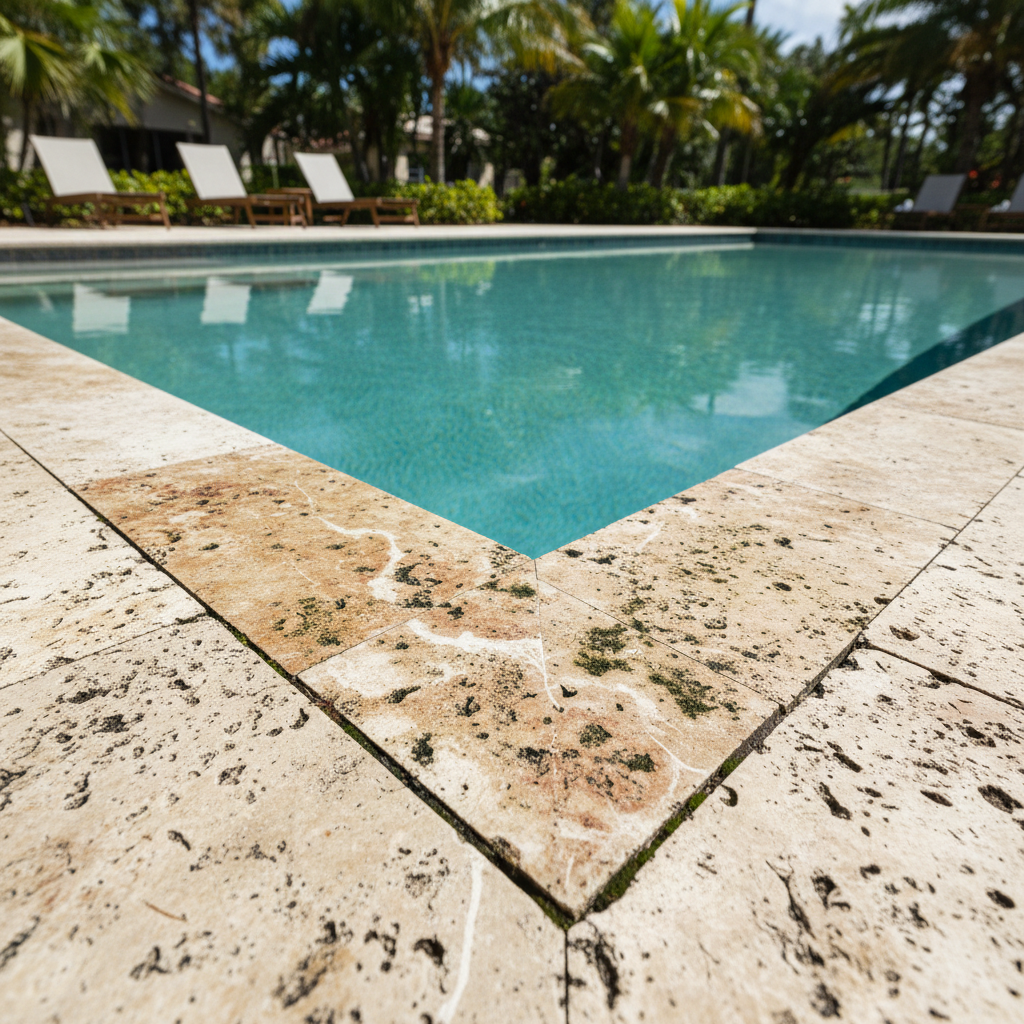
Travertine Pavers: The Pool Deck Surface That Stains in Silence
Travertine around pool decks absorbs everything — sunscreen, tannins from organic debris, iron from sprinkler water. The fills in the natural holes trap it. Most homeowners reach for whatever's under the sink. That's where we see the damage: acid cleaners that etch the surface, bleach that strips sealant and leaves the stone open to re-staining within weeks. We assess the stain type first. Organic? Enzyme pre-treat. Mineral? Efflorescence remover. Iron? Oxalic acid soak. Then 1,500 PSI with a surface cleaner attachment for even coverage. No streaks. Sealed same day.
Acid-based driveway cleaners — dissolves the calcium carbonate binder permanently
Test efflorescence first. If white mineral deposits, treat with oxalic acid before washing.
Concrete & Garage Slabs: Where 3,000 PSI Finally Makes Sense
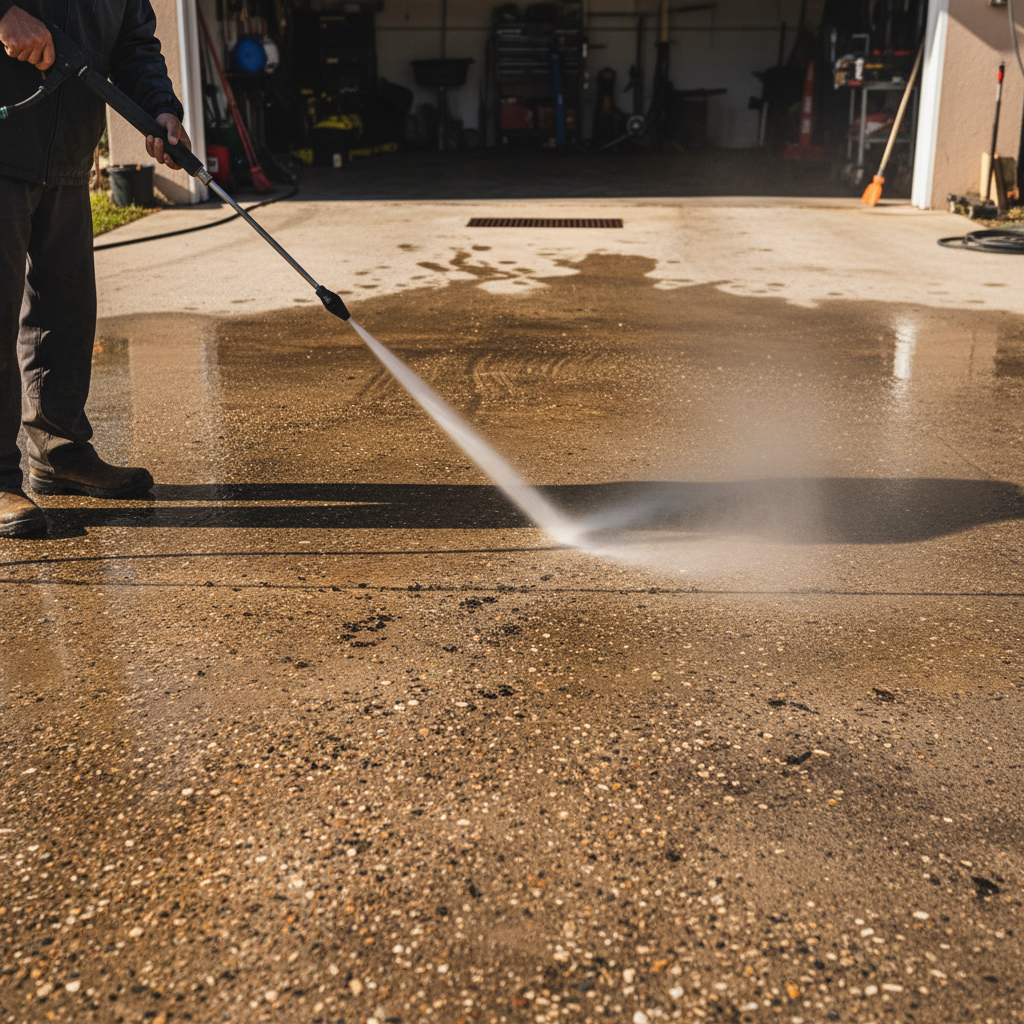
Doral warehouse operators: this section is for you. Concrete can handle the full 3,000 PSI, and for motor oil, hydraulic fluid, and industrial grime, it needs it. But pressure alone on oil is like trying to clean a cast-iron pan with just hot water. You need a butyl-based degreaser, 10-minute dwell, agitation, then the hot-water pressure wash. We run 200°F water through a surface cleaner attachment — the rotating nozzle eliminates the tiger-striping you get from hand-wanding — and the result is a slab that looks like it was poured last week. HOA violation letters stop arriving.
Skipping degreaser on oil stains — pressure alone smears them deeper into the pour
Use a 15-degree yellow-tip nozzle with a surface cleaner. Overlap each pass by 2 inches.
Wood Docks & Seawalls: Salt, Algae, and the Tidal Clock
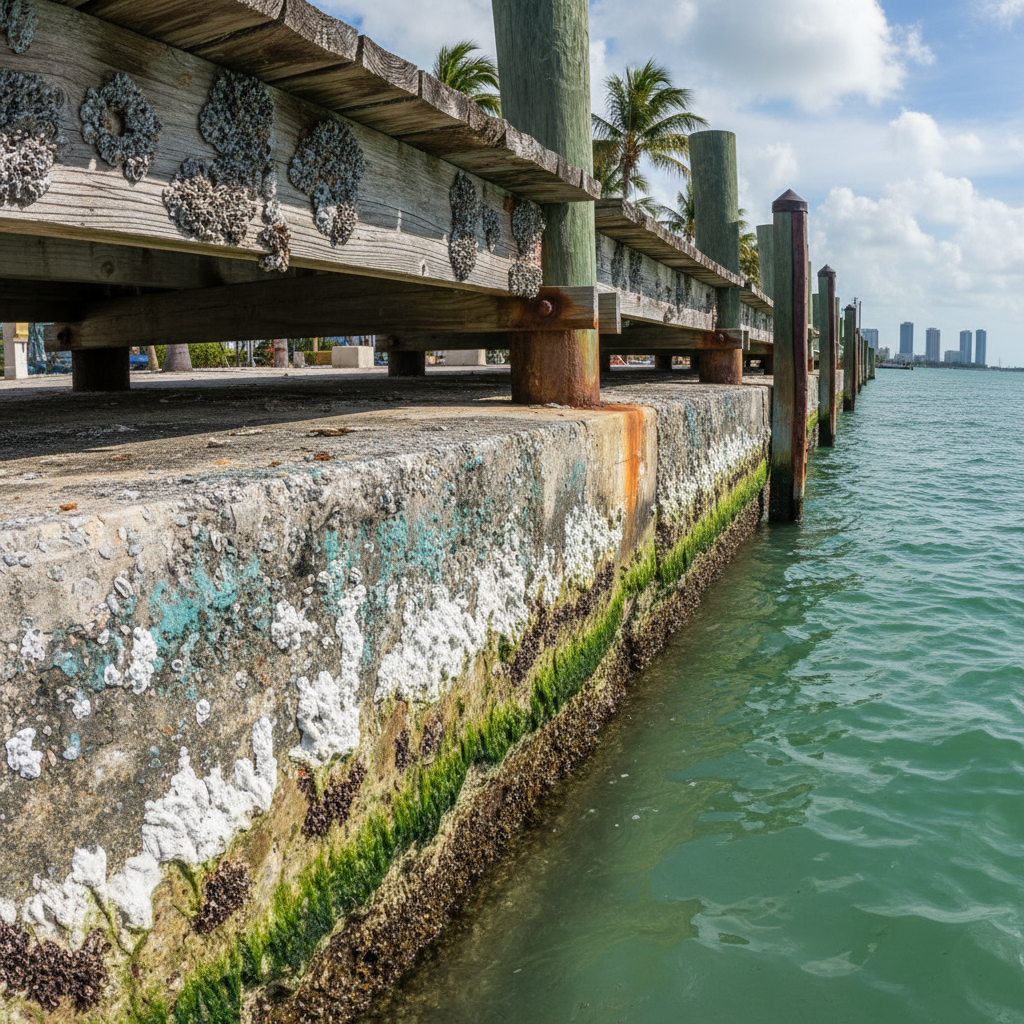
Waterfront properties in Miami Beach and Coconut Grove deal with a triple threat: black algae, saltwater mineralization, and tidal barnacle growth. Chlorine bleach is illegal in tidal zones — and it shows up in your water quality inspection. We use oxygen bleach (sodium percarbonate) which breaks down to water and oxygen, is EPA-compliant, and still kills algae at the root. After washing at 1,800 PSI with a fan tip, we apply a penetrating sealer that locks out salt reabsorption. Dock looks new. Passes inspection. Insurance company stops sending letters about deferred maintenance.
Chlorine bleach near tidal zones — EPA violation and kills barnacle ecosystem
Schedule for low tide. Treat algae from dock edge inward. Seal within 48 hours while wood is open.
The Complete Miami Surface Washing Field Guide
A 12-page laminated-style reference covering every Miami surface material, correct PSI ranges, detergent chemistry, seasonal timing, and the 7 mistakes that cause permanent damage. Written by our crew leads. Used by 400+ Miami homeowners.
- PSI charts for 12 Miami surface types
- Soft wash vs. pressure wash decision tree
- Seasonal schedule (rainy vs. dry season)
- Pre-sale prep checklist for listing agents
- EPA-compliant detergent guide for tidal zones
Download the Free Guide
No spam. No sales pitch. Just the field manual.
Used by 400+ Miami homeowners · No spam, ever
Beyond Clean: The Real Stakes
Health codes, insurance requirements, HOA fines, and listing ROI — the reasons to wash your Miami property go far beyond aesthetics.
Black Mold & Mildew Are a Health Code Issue, Not a Cosmetic One
Gloeocapsa magma and Aspergillus mold spores on exterior stucco and roof tiles become airborne in Miami's humidity. HVAC intakes on exterior walls pull contaminated air inside. Three weeks of untreated mold growth can trigger respiratory symptoms in children and elderly residents. Property managers in Brickell: your next tenant turnover checklist should start outside.
92% of Coral Gables Listing Agents Require Exterior Wash Before Photos
A $450 pressure wash adds an average $4,200 to listing price perception according to 2024 Miami-Dade appraisal data. Clean exteriors close 11 days faster.
Citizens Insurance Now Requires Clean Roofs for Policy Renewal in Miami-Dade
Since 2023, Citizens Property Insurance requires photographic proof of moss and algae-free roof tiles at renewal. Failure to clean = non-renewal notice.
Doral & Kendall HOAs Issue Violation Letters Within 30 Days of Wet Season Onset
Miami's May–October rainy season deposits enough organic matter on driveways, roofs, and driveways to trigger HOA violation letters by June 15 in most Doral and Kendall communities. Fines start at $100/day and compound. Warehouse operators with large concrete aprons are the most common violators — the surface area is too large for DIY and too expensive to ignore. One scheduled wash in late April prevents the entire cycle.
Best Window: March–April Before Rainy Season
April is Miami's sweet spot — dry enough for sealant to cure, before mold season peaks. Book 3 weeks ahead.
Book Your Free On-Site Estimate
Tell us your address and surfaces. We'll visit, assess, and send a flat-rate quote within 24 hours. No upsells. No hidden fees. Just the number.
Schedule Your Estimate
Takes 90 seconds. No commitment required.
We call within 4 hours during business hours (Mon–Sat, 7am–6pm)